📖 What is Artificial Intelligence? (1)
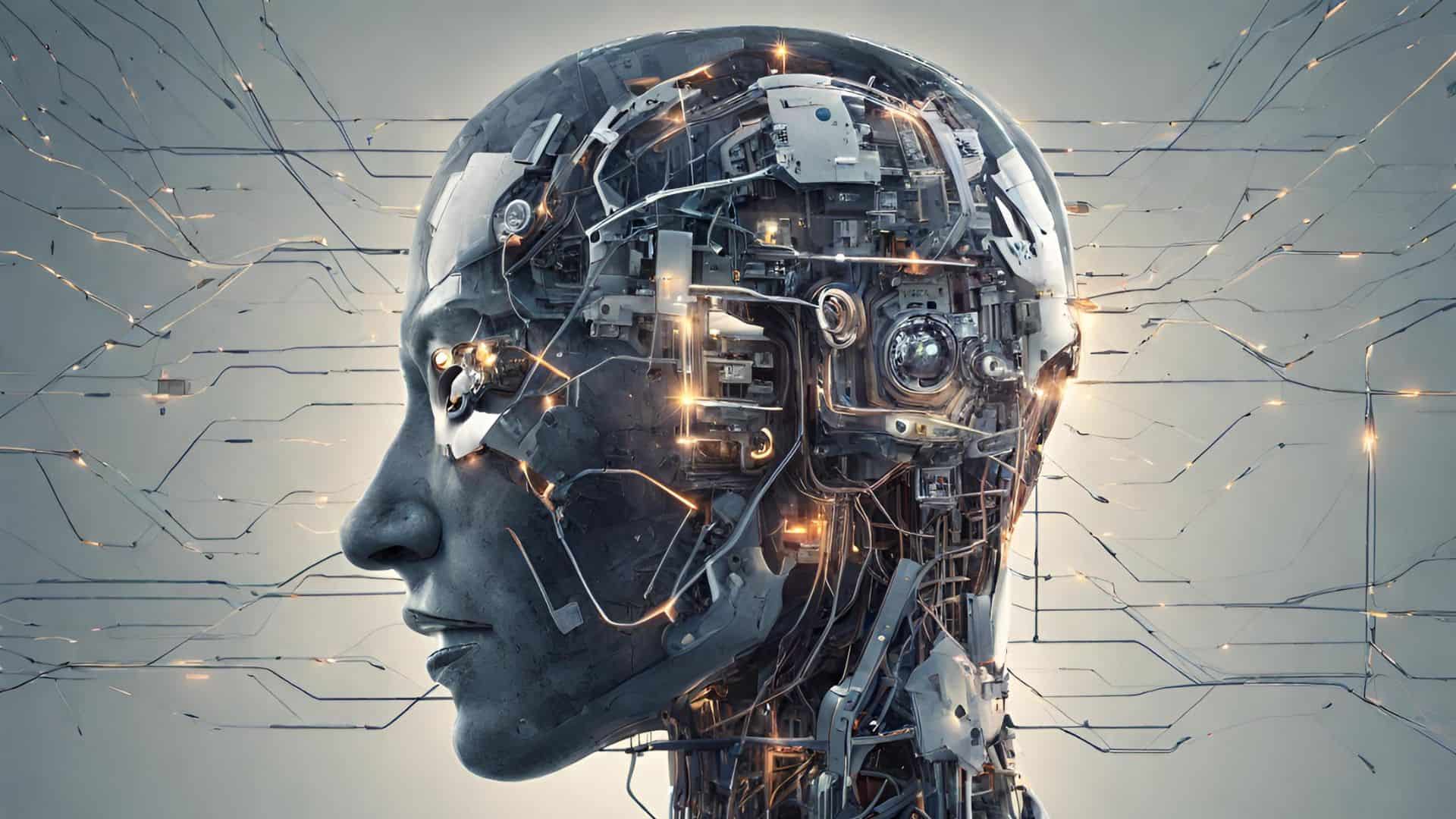
Artificial Intelligence is technology that appears to behave like human intelligence.
- When prompting Copilot, the responses almost appear to have been generated by another person.
- When asking Alexa or Google Music to play a song, it can feel like a DJ selecting and playing music for you.
- Self-driving cars appear to make intelligent decisions to avoid obstacles and navigate complex manoeuvres such as parallel parking.
What is Artificial Intelligence? (2)
- While it may appear to do so, AI does not "think" like humans.
- It is very good at identifying patterns in data.
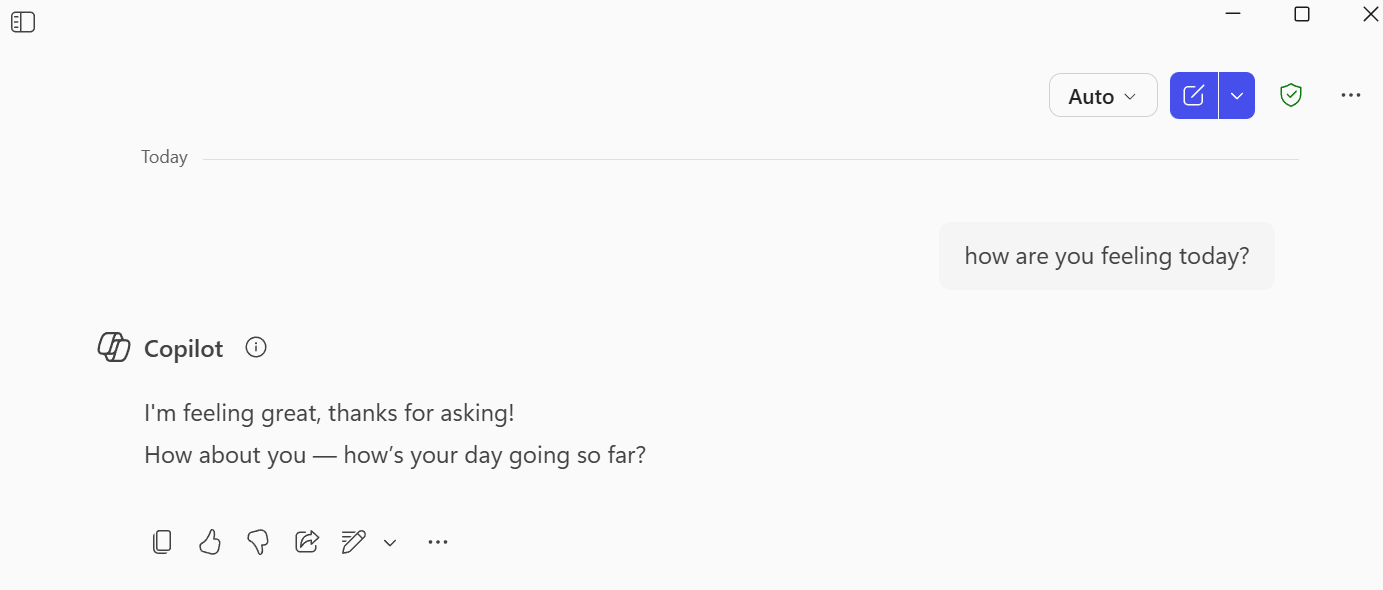
For example: When I ask a large language model, "How are you feeling today?", it predicts what it is supposed to respond with.
There is not really an intelligence behind it — just clever design.
Traditional Programming vs Machine Learning (2)
A good example of human-generated code can be found in computer game NPCs (non-playable characters).
- Although a non-playable character (NPC) acts as if it has its own free will, everything it does has been pre-determined by the programmer's instructions.
- In Minecraft, when your character offers a villager some bread, they are coded to behave in a certain way in response.
- You may observe lots of seemingly independent behaviour and mannerisms from the villager; however, they are all pre-determined (decided beforehand).

Traditional Programming vs Machine Learning (3)
The type of programming where a human has to think of and then code every possible scenario is often referred to as Traditional Programming.
For decades, this has meant the development of software requires hours of painstaking and highly focused work to get it right.

Traditional Programming vs Machine Learning (4)
Machine Learning differs greatly from Traditional Programming.
- Machine Learning relies upon an algorithm that improves itself over time.
- This is done through positive reinforcement each time it produces the correct outcome.
- A bit like training a dog.

Traditional Learning vs Machine Learning (5)
💻 Machine Learning is now part of many aspects of modern life.
Software developers (coders) are still an important part of the process; however...
- They now develop applications that are capable of learning what to do by themselves.
- Software developers even use AI to write large (generic) parts of code, saving them time.
That said, the process of coding new software still requires an expert programmer to make high-level adjustments to the software.

Machine Learning (1)
Machine Learning requires lots of training data.
A simple example of AI would be a spam filter on an email account (spam is junk email nobody wants):
- The spam filter is given tens of thousands of emails to examine at a time.
- A human trainer has already identified which are spam and which are legitimate emails.
- Each time the spam filter successfully identifies a spam email, the trainer flags this, and the spam filter learns what it is doing correctly.
- If it makes a mistake, the trainer flags this, and the spam filter aims to adjust its algorithm for future attempts.
- Over time, the algorithm becomes highly effective at its job.

Machine Learning (2)
Another example of Machine Learning would be the training of Large Language Models (LLMs) such as ChatGPT and Google Gemini.
- The LLM is given vast libraries of text.
- A human trainer then prompts the LLM with questions.
- The LLM predicts which words to respond with and in what order.
- As with the spam filter, good and bad responses are flagged.
- Over time, the LLM starts to predict exactly how it should respond.
- In many cases, these responses are strikingly realistic.